
Kiro UX Auditor
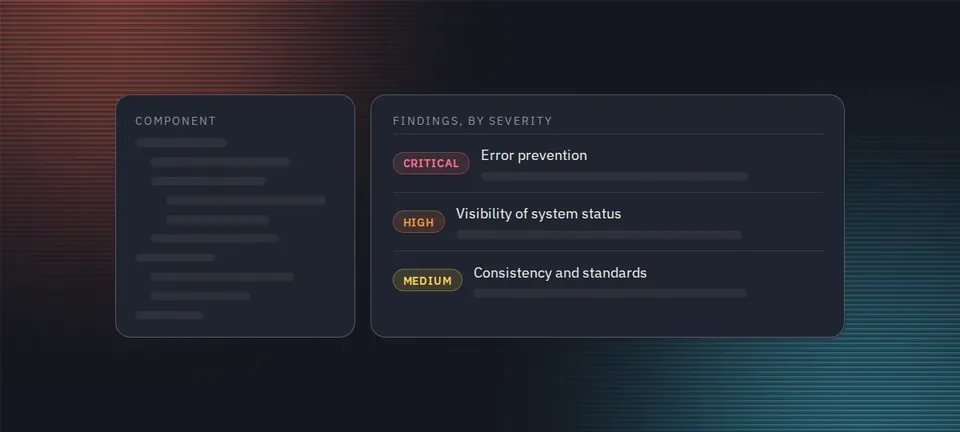
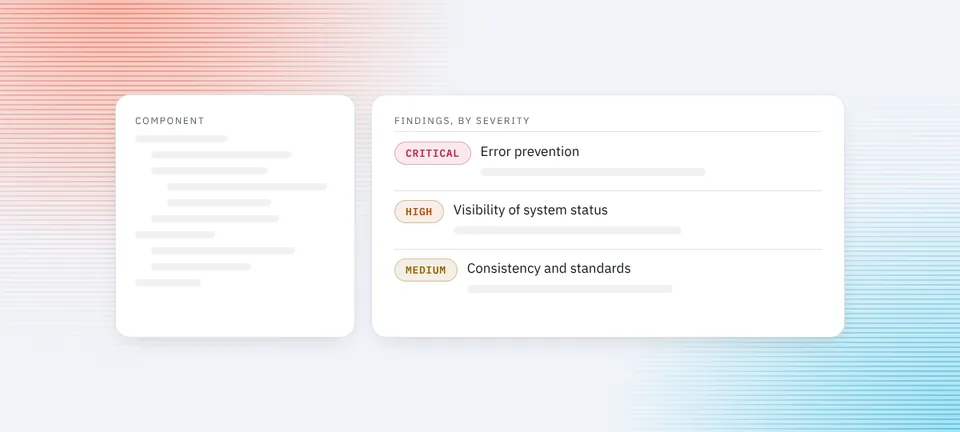
Paste one UI component and get findings against Nielsen Norman Group’s 10 usability heuristics, each with a severity rating.
The same agent logic, made visible
The auditor I built for an enterprise Kiro AI kit runs inside Kiro, where nobody outside that company can see it. This public version makes the same logic demonstrable.
What I did
It uses the same agent logic as the Kiro version: a steering file with UX conventions, the auditor agent definition and an audit hook. The difference is a manual trigger instead of an audit on every file save.
For how this fits into the rest of my AI work, see AI-Augmented Practice.
How it works
Read the experience
It looks at intent, flow, feedback and cognitive load the way a user would meet them, not at visual polish alone.
Apply the heuristics
Each issue is tied to one of Nielsen Norman Group’s 10 heuristics and rated critical, high, medium or low.
Keep only what’s provable
It reports only issues with evidence in the code, five at most. It never edits files and doesn’t invent problems.
Say so when it’s clean
If nothing qualifies, it returns an exact “no issues” line instead of padding the report.
Decisions that matter
Only issues with evidence in the code, and five at most.
It never edits files.
An exact “no issues” line when there is nothing to report.
Accessibility is out of scope, because that is a separate audit.
Together these are the rules that keep an AI reviewer from inventing problems.
Honest limits
It audits one pasted component at a time. It doesn’t see flows or real user behavior.