
UX Design Briefing
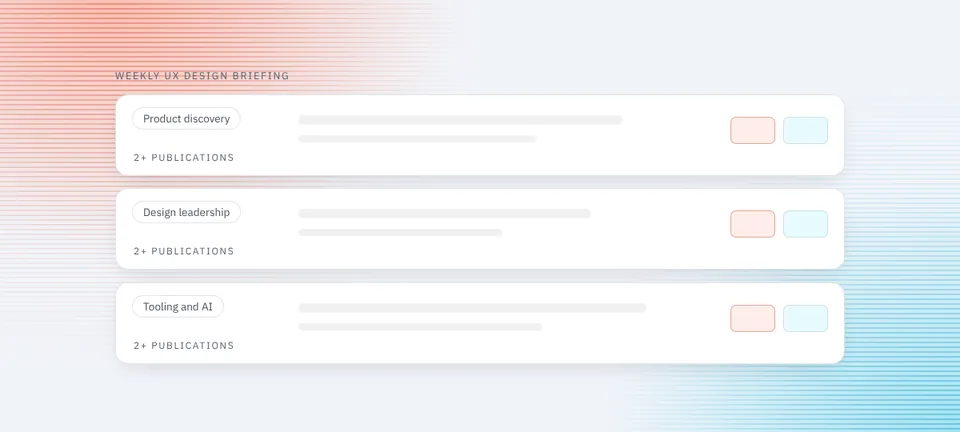
A weekly briefing on what UX and product practitioners are debating, generated from design and product publications.
A filter for staying informed, not another feed
Newsletters, articles and AI announcements had become a job in itself, and textbook advice often didn’t match shipping enterprise products under deadlines. I wrote about the idea in a September 22, 2026 LinkedIn article.

The rebuild
The first version, built with Gemini, showed status it didn’t have: a hardcoded “14 sources” and an Update button that did nothing.
I rebuilt it as a real weekly pipeline with checks. Catching my own tool overstating itself is the better story.
How it works
Collect
Every Monday a scheduled job reads publication RSS feeds and keeps the last two weeks of articles.
Group
Claude groups articles that address the same practical question. A topic needs at least two different publications to count.
Write
Claude writes each briefing from titles and excerpts only, and the page says so.
Check
Code rejects any briefing that cites an article outside its group. If fewer than three feeds respond, the run fails.
Decisions that matter
Nothing is written by hand, and nothing changes between runs.
Code, not the prompt, enforces that a briefing cites only articles inside its own group.
A failed run leaves last week’s briefing in place instead of publishing a thin one.
The page shows its own provenance: how many articles it scanned, how many sources responded, and how the briefing is made.
Result: a live, self-updating page, restyled on October 9 to match the portfolio’s case-study layout.
Honest limits
It synthesizes excerpts, not full articles, so read it as a map to the articles, not a summary of them.